

Shannon Moretz: Let’s learn from preparation mistakes before the next Helene
After-action reports show state and local officials weren’t ready. Let’s prepare now before the next disaster.

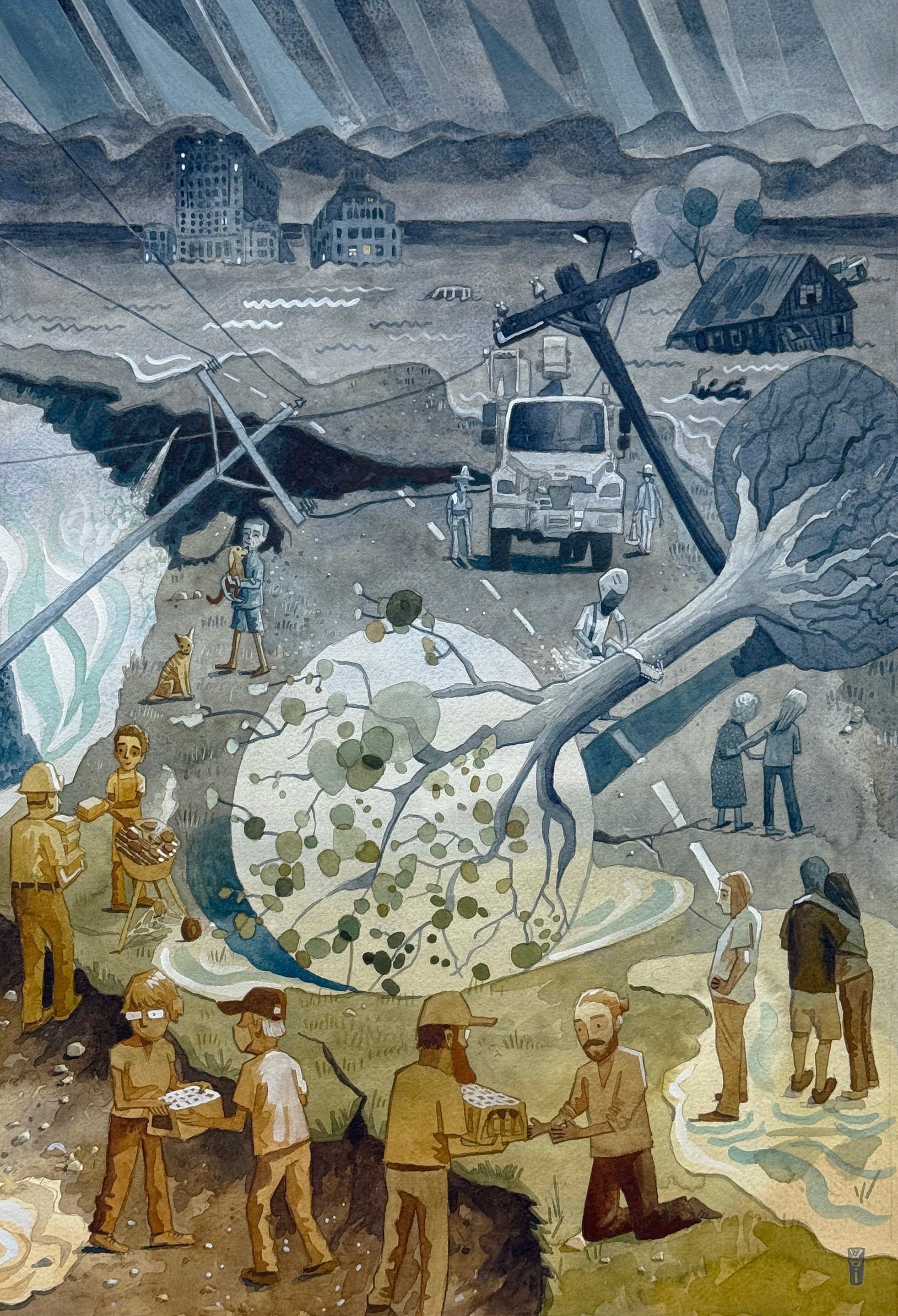
Creeks will rise and water will flow.
We know this yet cling to the hope, “Maybe it won’t happen to us. Not here. Not now.”
Stories and images of the flooding in Western North Carolina last year and the Texas Hill Country this July were horrific. I cried over the loss of life, the terror those folks must have felt in their final moments, and the monumental, collective effort of survivors to dig out, rebuild, and keep going.
It’s been a year since Hurricane Helene hit Western North Carolina on September 27, 2024.
Here is one lesson we should not lose sight of: We know that the response could have been better if more localities were ready to work together.
“Local politics and interpersonal dynamics…created bottlenecks in the resource request process,” reported one field operator, according to a major state after-action report.
That’s another way of saying that personal feuds and bad relationships prevented people who should have been working together from getting things done when the stakes were high.
These after-action reports haunt me.
They highlight the importance of advanced preparation — and they remind me of conversations we had in rural Caswell County, where I live, more than two decades ago after September 11, 2001.
Rescue and recovery workers poured into New York to help after the 9/11 terrorist attacks but communication was a challenge. Responders’ radios only worked in their own jurisdictions and every agency had different protocols. After action reports from 9/11 highlighted that it was crucial for first responders to have shared technology, language, and processes to efficiently work together across jurisdictions in a disaster.
Now, we tend to think of the Federal Emergency Management Agency (FEMA) as disaster response, but 20 years ago, FEMA was better known for providing the training, structure, and grant dollars local governments would need to effectively respond in a disaster.
Some Caswell County commissioners and residents grumbled about the time and resources “wasted” as public safety, public health, and other local government employees attended training and tabletop exercises. They argued that our rural area, with a population of just over 23,000 back then (and hasn’t changed much since) would never be the target of a terrorist attack.
Local leaders challenged policymakers to consider that while Caswell may not seem a likely target for terrorists, Greensboro, Raleigh, and Durham certainly were. We might be called to help. Either way we’d likely have to fend for ourselves. What if there was a pandemic, or a significant weather event? We should be prepared.
Budget hawks argued that poor counties like us couldn’t afford luxuries like generators or high-tech communications, especially not if they could only be paid for with tax dollars—even if those dollars came from the federal government.
Luckily, our local public safety, public health, and emergency service leaders stood firm. They leveraged every available external funding stream and partnership to limit or eliminate any local investment required and advocated tirelessly for proactive solutions.
I wish local governments in WNC had done the same. I remembered those conversations as I read the after-action reports from Helene, which highlighted the inability of agencies in Western North Carolina to communicate across jurisdictions as a hindrance to rescue efforts.
At least 135 people and more than 35 children who died in the July flood in Texas would have benefited from similar planning and investments. They too had been warned.
It was widely reported that Kerr County, Texas, officials — where the horrific flood occurred that overwhelmed a childrens’ summer camp — identified the need for a warning system along the flood-prone Guadalupe riverbed in 2016. However, the county never allocated the $1 million necessary to complete an early warning system project that might have saved those lives.
The Texas Tribune reported that county commissioners spent over $1 million in federal dollars that was allocated from the American Rescue Plan on staff raises and other expenses. They may not have known they could have invested that money in an early warning system, the Tribune reported.
It’s been 24 years since 9/11 revealed the gaps in our nation’s ability to respond to disaster. We’ve since experienced hundreds of terrorist attacks, mass shootings and disaster declarations from weather in North Carolina.
Just this past July, flash flooding from Tropical Storm Chantal washed out several roads in Caswell and caused catastrophic flooding in Orange County and elsewhere.
Disaster is hardly unimaginable, even in our own backyard.
U.S. Rep. Richard Hudson, R-Southern Pines, is advocating to make sure we are prepared, as he said in a post on X: “On 9/11 our networks were overwhelmed, and during Hurricane Helene in North Carolina many families could not reach 911. Reliable and fast connections are critical in every disaster. They save lives. Congress must strengthen FirstNet and advance Next Generation 911 so responders have the tools they need to save lives.”
Every local, state, and federal budget demonstrates just how committed lawmakers are to equipping first responders.
Here in the rural South, we often refer to being “up the creek without a paddle.” When the creek rises, we won’t hesitate to row to the rescue of our neighbors, but when disaster strikes, we really need our elected officials to make sure we have enough paddles and the relationships to share them.
Shannon Moretz is the Regional Director of The Health Collaborative and works to advance health equity in the rural south, particularly the Dan River Region. This column is syndicated by Beacon Media and is available to republish for free on all platforms under Beacon Media’s guidelines.
 | A guest post by
|
Excellent article! I appreciate the connections between emergencies, now and in history. Our communities are connected and may experience or be called on to help during all kinds of unthinkable situations.
I love seeing real art by real-person artists rather than plagiarizing, environment-destroying AI.